- 01The methods fall into five groups
- 02Comparing the 18 methods at a glance
- 03SPU is the foundation on Rakuten Ichiba
- 04Okaimono Marathon and Rakuten Super SALE
- 05Days ending in 5 and 0, and Rakuten Super DEAL
- 06Earning with Rakuten Card and Rakuten Pay
- 07Earning with Rakuten Mobile and fixed costs
- 08Earning with Rakuten Securities and Rakuten Bank
- 09Four free ways to earn little by little
- 10Regular points and limited-time points
- 11How to decide the order of priority
- 12Common mistakes and pitfalls
- 13Frequently asked questions
- 14Official sources I referred to
- 15Summary
Good morning, this is まさきん.
The more you look into how to earn Rakuten Points, the more methods you find. I suspect many people get stuck on where to start. So this time I am sorting the methods into 18 items and laying out the big picture and the order of priority.
Note: this reflects the information available at the time of publication. Please check the official sites for the latest conditions.
- Rakuten Points are easier to organize when you view the earning methods in 5 categories: shopping, payments, fixed costs, finance, and free
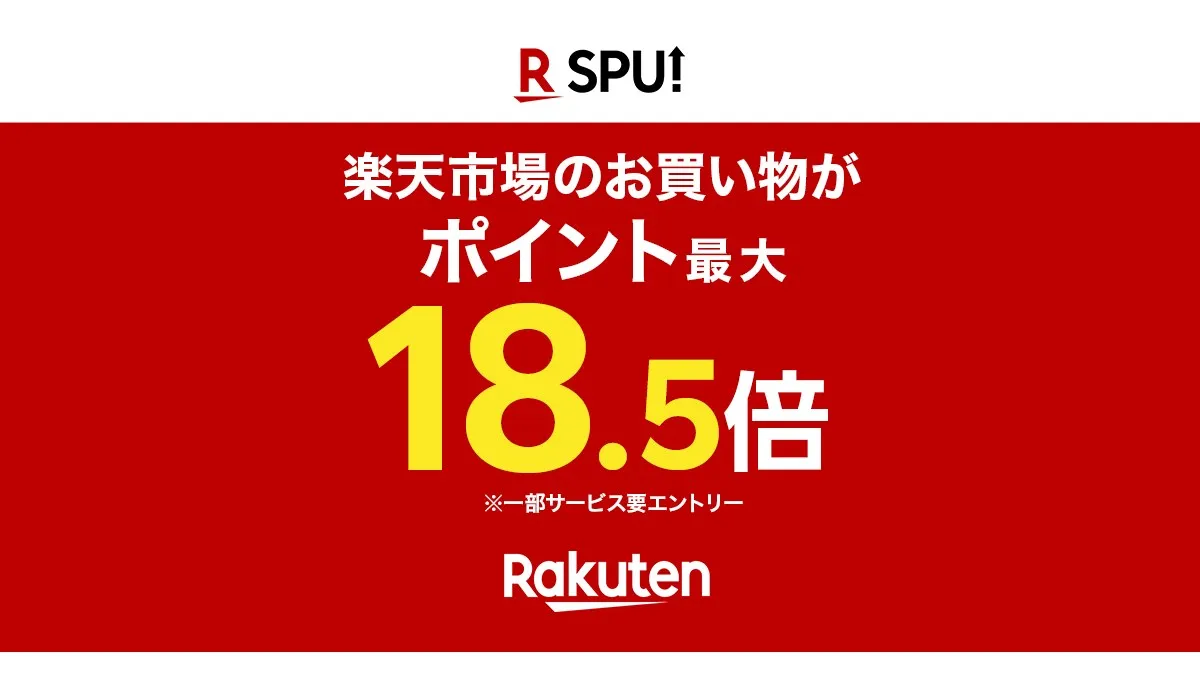
- The foundation is SPU on Rakuten Ichiba, with a multiplier of up to 18.5x. Each service has a monthly cap on points earned
- For in-store payments, Rakuten Pay is the core. Combined with showing your point card, it is up to 2.5% back
- Regular points expire one year from (and including) the month you last earned. Limited-time points each have their own expiry
- The order “fixed costs and payments → how you buy on Rakuten Ichiba → small free earners” is the easiest to keep up
The methods fall into five groups
With Rakuten Points, you generally earn 1 point per 100 yen (before tax) when you use a Rakuten service. That is the starting point for everything. On top of that sit a number of bonus mechanisms.
Those bonus mechanisms fall into five broad groups: shopping, payments, fixed costs, finance, and free.
I look at these five in terms of effort and the size of the amounts involved. The ones that keep paying every month once you set them up come first.
Comparing the 18 methods at a glance
Here is the full table first. For the return figures, I have only written what I could confirm on official pages.
| Category | Method | Typical return or multiplier | Main conditions | Effort |
|---|---|---|---|---|
| Shopping | SPU | Up to 18.5x | Use of eligible services. Some require entry | Initial setup only |
| Shopping | Okaimono Marathon | Up to 11x | Shop-hopping with 1,000 yen (tax included) or more per shop | Entry for each event |
| Shopping | Rakuten Super SALE | Multiplier rises with shop-hopping | Depends on the conditions of each event | Entry for each event |
| Shopping | Days ending in 5 and 0 | +1x | Rakuten Card payment and entry on the day | Entry on each event day |
| Shopping | Rakuten Super DEAL | Up to 50% points back | Buy eligible items while logged in as a member | Finding eligible items |
| Payments | Rakuten Card | 1 point per 100 yen | Pay by card | None |
| Payments | Rakuten Pay | 1.0 to 1.5% | Pay from Rakuten Pay balance | Topping up the balance |
| Payments | Rakuten Edy | 1 point per 200 yen (tax included) | Advance setting to earn points | Initial setup only |
| Payments | Showing the Rakuten Point Card | 0.5 to 1.0% | Show it at checkout at participating stores | Showing it every time |
| Fixed costs | Rakuten Mobile | SPU +4x | Contract and entry | Initial setup only |
| Fixed costs | Rakuten Denki | SPU +0.5x | 5,500 yen (tax included) or more used in the previous month, and card payment | Initial setup only |
| Fixed costs | Rakuten Hikari / Rakuten Turbo | SPU +2x | Contract and entry | Initial setup only |
| Finance | Rakuten Securities | Two kinds of SPU +0.5x | Point investment of 30,000 yen or more per month | Monthly purchase |
| Finance | Rakuten Bank | Earning multiplier up to 3x | Entry in the Happy Program | Initial setup only |
| Free | Rakuten lotteries | Varies by lottery | Log in and draw | Daily |
| Free | Super Point Screen | Varies by content | View ads and the like in the app | Daily |
| Free | Rakuten Point Mall | Varies by content | Play games or use offers | As needed |
| Free | Rakuten Rebates | Points-back rate set per store | Shop at partner stores via Rebates | Each purchase |
Looking at the “Effort” column, the difference in character is clear. The four free methods only pay off if you have the habit of keeping at them.
SPU is the foundation on Rakuten Ichiba
SPU stands for Super Point Up Program. When you use Rakuten group services, your multiplier on Rakuten Ichiba for that month goes up. The official page states the multiplier when everything is achieved as up to 18.5x.
If you meet a condition by the last day of the month, it applies to that month’s shopping. There are some exceptions, though. Things like receiving your salary at Rakuten Bank need to have been achieved in the previous month.
Listed from the largest multiplier, it looks like this.
| Service | Multiplier | Monthly earning cap | Condition |
|---|---|---|---|
| Rakuten Mobile | +4x | 2,000 points | Contract and entry |
| Rakuten Mobile carrier billing | +2x | 1,000 points | Payments of 2,000 yen or more per month, and entry |
| Rakuten Turbo / Rakuten Hikari | +2x | 1,000 points | Contract and entry |
| Rakuten Card, regular portion | +1x | No cap | Shop on Rakuten Ichiba with a Rakuten Card |
| Rakuten Card, bonus portion | +1x | 1,000 points (5,000 for the Premium Card) | Same as above |
| Rakuten Travel | +1x | 1,000 points | One booking of 5,000 yen or more per month, and the stay |
| Rakuten Bank + Rakuten Card | Up to +0.5x | 1,000 points | +0.3x for setting it as the debit account. +0.2x for receiving salary and the like |
| Rakuten Securities, mutual funds | +0.5x | 2,000 points | Point investment totaling 30,000 yen or more per month |
| Rakuten Securities, US stocks | +0.5x | 2,000 points | Point investment totaling 30,000 yen or more per month (yen settlement) |
| Rakuten Denki | +0.5x | 1,000 points | 5,500 yen (tax included) or more used in the previous month, and card payment |
There are other +0.5x services as well, such as Rakuten Wallet, Rakuten Books and Rakuten Kobo. Showing the Rakuten Point Card at FamilyMart is also included.
Most of the points added by SPU are limited-time points. The official page says they are valid until 23:59 on the last day of the month after they are granted. It may be a good idea to decide where you will spend them along with how you earn them.
Working backward from the monthly caps
The easy thing to overlook with SPU is the monthly earning cap. Even with a high multiplier, nothing more is added beyond the cap.
For example, the +4x for Rakuten Mobile is capped at 2,000 points per month. By calculation, you hit the cap at 50,000 yen (before tax) of Rakuten Ichiba shopping in a month. Buy more than that and this +4x portion does not grow.
The +1x bonus portion for Rakuten Card is capped at 1,000 points on the regular card. Here 100,000 yen before tax is the guide. Compare these with your own monthly shopping and you can see which multipliers are actually working for you.
I covered SPU around Rakuten Mobile in detail in how SPU changes when you sign up for Rakuten Mobile. In this article I am only noting where it sits in the big picture.
Okaimono Marathon and Rakuten Super SALE
Okaimono Marathon (the “Shopping Marathon”) is a campaign in which your multiplier rises with the number of shops you buy from. The official page says shop-hopping gives up to 10x. Using Rakuma adds +1x, for a total of up to 11x.
What counts is a purchase of 1,000 yen (tax included) or more per shop. Anything at 999 yen or less is not counted toward the number of shops. The earning cap was 7,000 points for the shop-hopping portion. The Rakuma bonus has a separate cap of 1,500 points.
Entry is required. However, if you enter during the period, purchases made before your entry also count.
Rakuten Super SALE has the same shop-hopping mechanism. The official SPU page carried an example with the Super SALE shop-hopping cap at up to 7,000 points. In both cases the conditions change with each event, so it is safest to check the campaign page every time.
How to build the shop-hopping numbers is covered in my article designing Rakuten Super SALE shop-hopping by the numbers.
Days ending in 5 and 0, and Rakuten Super DEAL
The “days ending in 5 and 0” campaign runs on the 5th, 10th, 15th, 20th, 25th and 30th of every month. When you shop on Rakuten Ichiba with a Rakuten Card, entry adds +1x. The cap is 1,000 points per month, and entry is needed on each event day.
It is often described as “4x,” but that is the total multiplier. I broke it down in what makes up the 4x points on days ending in 5 and 0.
Rakuten Super DEAL is a service in which eligible items come with high points back. The official page describes it as up to 50% points back. The condition is that you buy while logged in as a Rakuten member.
DEAL is determined by the product, not the date. So I think it suits a style where you first check whether the thing you want is eligible. The mechanics are in my article on Rakuten Super DEAL points back.
Earning with Rakuten Card and Rakuten Pay
Outside Rakuten Ichiba, payments take center stage. The Rakuten Card basically earns 1 point per 100 yen spent. Just consolidating your monthly payments earns points, so it takes almost no effort.
With Rakuten Pay, the return rate depends on the payment method. Under the official rewards program, paying from Rakuten Pay balance was 1.0 to 1.5%. Paying with points or from a Rakuten Bank account is 1.0%.
There is a condition for getting 1.5%. You need to show the Rakuten Point Card inside the app at least twice during the counting period. The counting period is fixed as the 16th of the month two months before the applicable month through the 15th of the previous month.
Only the Rakuten Point Card inside the app is counted here. Plastic cards were stated to be excluded. The point card on the back of a Rakuten Card is excluded too.
Rakuten Edy and the Rakuten Point Card
With the Rakuten Point Card, you earn by showing it at checkout at participating stores. The return rate is 0.5 to 1.0% and varies by store. The distinctive feature is that it earns separately from the payment method.
At stores where Rakuten Pay is accepted, you can stack showing the card and paying. Up to 1.0% for showing it, and up to 1.5% for paying from Rakuten Pay balance. The total is up to 2.5%. Some stores have different return rates, so it is worth checking the ones you visit often.
Rakuten Edy earns 1 point per 200 yen (tax included) paid. The condition is that you have set it up in advance to earn Rakuten Points. Topping up from a Rakuten Card also earns 1 point per 200 yen.
If it were me, I would start by consolidating everything into the single Rakuten Pay app. Showing the card and paying both happen in the same app.
Earning with Rakuten Mobile and fixed costs
The strength of fixed costs is that they occur every single month. Once the contract is in place, you keep meeting the conditions without doing anything.
Rakuten Mobile gives +4x under SPU. It is the largest multiplier among the eligible services. Entry is required in addition to the contract, so this is the one thing not to forget.
Rakuten Turbo and Rakuten Hikari give +2x for a contract with either one plus entry. Rakuten Denki (electricity) is +0.5x, and it counts when the previous month’s usage was 5,500 yen (tax included) or more. Completed payment by credit card is also part of the conditions.
I do not think fixed costs are something to switch purely for the points. Whether the price and usability fit you comes first.
If it were me, the first thing I would review is the telecom bill. The amount is large, and the SPU multiplier is the biggest too.
Clicking this opens the Rakuten login page. Once you log in, you’ll see the campaign details.
Earning with Rakuten Securities and Rakuten Bank
At Rakuten Securities, point investment is covered by SPU. Mutual funds and US stocks (yen settlement) each give +0.5x. Both require purchases totaling 30,000 yen or more in the month. You also need to set up the Rakuten Point Course and Money Bridge.
There is one more fine-print condition. The purchase must use at least 1 point. If you buy entirely with cash, it does not count toward SPU.
When you pay for mutual fund installment investing with a Rakuten Card, you earn points according to the payment amount. The rate varies by card type and fund, so it is worth checking your own conditions on the official page. Note that investing carries the risk of losing principal. Putting in more than you can afford just for the points is something to avoid.
Rakuten Bank has the Happy Program. Once you enter, your member stage is determined by your balance or number of transactions. There are 5 stages, and the point earning multiplier ranges from 1x to 3x.
| Member stage | Condition (either one) | Point earning multiplier |
|---|---|---|
| Super VIP | Balance of 3 million yen or more, or 30 or more transactions | 3x |
| VIP | Balance of 1 million yen or more, or 20 or more transactions | 3x |
| Premium | Balance of 500,000 yen or more, or 10 or more transactions | 2x |
| Advanced | Balance of 100,000 yen or more, or 5 or more transactions | 1x |
| Basic | Entry | 1x |
If you set Rakuten Bank as the debit account for your Rakuten Card, SPU also goes up by +0.3x. If you receive salary, pension or similar there, that is a further +0.2x.
Four free ways to earn little by little
There are also ways to earn without spending money. Each one yields little at a time, but the nice part is that they need no capital.
The first is Rakuten lotteries. There are lotteries such as the Lucky Kuji that you simply log in and draw. The number of points and winning tickets differ for each lottery.
The second is Super Point Screen. Officially it is introduced as a point-earning app where you collect Rakuten Points every day. You receive points for viewing ads and flyers.
The third is Rakuten Point Mall. It is the gateway to point-earning content such as games and surveys. The fourth is Rakuten Rebates, where you get points back when you shop at partner stores via the site. The rate differs by store and also changes over time.
I think these four suit some people and not others. If you can enjoy them in spare moments, you will probably keep them up.
Regular points and limited-time points
There are two kinds of points you accumulate: regular points and limited-time points.
| Item | Regular points | Limited-time points |
|---|---|---|
| Expiry | One year including the month you last earned | Individual expiry for each batch of points |
| Extension | Extended if you earn even once within the period | No extension |
| Exchange to other companies’ services | Possible | Not possible |
| Main source | Everyday shopping and payments | SPU and campaign bonuses |
Regular points effectively keep extending as long as you keep earning. However, earning limited-time points does not count toward the extension. This is stated clearly in the official help as well.
Limited-time points are used first, starting with those closest to expiry. Some services, such as Rakuten Denki, let you apply limited-time points to your payment. It is reassuring to have the earning mechanism and the spending mechanism ready as a set.
Membership rank conditions
Rakuten PointClub has membership ranks. Your rank is determined by the number of points earned and the number of times you earned over the past 6 months.
| Rank | Condition over the past 6 months |
|---|---|
| Diamond | 4,000 points or more and earned 30 or more times. Holding a Rakuten Card is also required |
| Platinum | 2,000 points or more and earned 15 or more times |
| Gold | 700 points or more and earned 7 or more times |
| Silver | 200 points or more and earned 2 or more times |
| Regular | Earn points by using a points-eligible Rakuten service |
The thing to watch is the “number of times.” That count only rises through repeated everyday payments. Rakuten Pay and showing your point card in stores help here too.
How to decide the order of priority
Having looked at the whole picture, this is the order I would set things up in.
- Look at fixed costs. Check what you pay every month without fail, such as telecom and electricity.
- Consolidate payments into one. Make Rakuten Card and Rakuten Pay the core of your everyday payments.
- Check your SPU multiplier. Log in to the official page and it shows your current multiplier.
- Build the entry habit. For shop-hopping events and days ending in 5 and 0, enter before you buy.
- Add the free methods. If you have room, work lotteries and apps into your routine.
The first two are done once and finished. If you go from the top down, the results should remain even if you stop partway.
Common mistakes and pitfalls
Forgetting to enter. SPU for Rakuten Mobile and Rakuten Turbo does not apply on the contract alone. The same goes for shop-hopping events and days ending in 5 and 0.
Buying more without looking at the cap. Purchases made to raise the multiplier are sometimes already over the cap. Buying only what you need is kinder to the household budget.
Letting limited-time points expire. SPU bonuses mostly expire at the end of the following month. If you earn them without deciding how to spend them, they may be gone by the time you notice.
Adding too many services for the multiplier. Signing up for a service you do not use for the sake of +0.5x ends up costing more. I think building around only what you normally use is easier to sustain.
- The multiplier shown assumes “no points used.” Some items are calculated differently when you pay with points
- Campaign conditions change with each event. Do not act on memory of the last one
- Some stores have different return rates and some transactions are excluded. Check the official page before a large purchase
- Have you logged in to the official page and checked your own SPU multiplier?
- Have you completed the SPU entry for Rakuten Mobile or Rakuten Turbo?
- Is Rakuten Bank set as the debit account for your Rakuten Card?
- Can you show the point card inside the Rakuten Pay app at least twice a month?
- Is your monthly Rakuten Ichiba spending within the monthly cap of each service?
- Have you decided on the expiry and the use for your limited-time points?
- Have you checked the conditions for shop-hopping or days ending in 5 and 0 on the page for that event?
Frequently asked questions
Q. What is the most efficient way to earn Rakuten Points?
I think the shortcut is to sort out the largest expenses first: fixed costs and everyday payments. On top of that, layer SPU and shop-hopping onto your Rakuten Ichiba shopping.
Q. Where can I check my SPU multiplier?
You can check it by logging in to the official SPU page. It is displayed in the form “Your SPU points are currently ●x.” Some services reportedly take time to be reflected.
Q. Is it still in time if I meet an SPU condition partway through the month?
If you meet it by the last day of the month, it applies to that month’s shopping. Purchases made before meeting the condition are covered too. However, receiving salary and the like at Rakuten Bank needs to have been achieved in the previous month.
Q. When do regular points expire?
One year including the month in which you last earned points. It is extended if you earn even once within that period. Earning limited-time points does not count toward the extension, so that is the one thing to be careful about.
Q. What can limited-time points be used for?
They can be used at Rakuten services, such as shopping on Rakuten Ichiba. They are used first, starting with those closest to expiry. On the other hand, they cannot be used for point exchange to partner services.
Q. How do I get the Rakuten Pay return rate to 1.5%?
Show the Rakuten Point Card inside the app at least twice during the counting period. Then pay from Rakuten Pay balance and you get 1.5%. In a month when you do not reach two showings, it is up to 1.0%.
Q. What are the conditions for becoming a Diamond member?
Having earned 4,000 points or more over the past 6 months. Having earned 30 or more times. In addition, you need to hold a Rakuten Card.
Q. Does Okaimono Marathon cover things I bought before entering?
If you enter during the eligible period, purchases made before entry also count toward shop-hopping. So you are still in time even if you notice after buying. It is reassuring to look at your entry history before the period ends.
Official sources I referred to
- SPU (Super Point Up Program) (Rakuten Ichiba)
- Okaimono Marathon (Rakuten Ichiba)
- Rakuten Super DEAL (Rakuten Ichiba)
- Days ending in 5 and 0 (Rakuten Card)
- Rakuten Points up to 2.5% rewards program (Rakuten Pay)
- Earn points twice when paying with the Rakuten Pay app (Rakuten Pay)
- Happy Program (Rakuten Bank)
- Point investment (Rakuten Securities)
- Rakuten Denki (Rakuten Energy)
- Rakuten Hikari (Rakuten Mobile)
- How rank-up and rank-keep work (Rakuten PointClub)
- What are limited-time points (Rakuten PointClub)
- About point expiry (Rakuten Ichiba Help)
- Rakuten Super Point Screen
- Rakuten Point Mall
- Rakuten Rebates
Summary
There are many ways to earn Rakuten Points, but splitting them into five groups makes the picture much clearer. You do not need to do all of them. I think it is enough to layer them, in order, onto spending that already exists in your life.
Start with fixed costs and payments. The telecom bill was where the amount is large and the SPU multiplier is biggest. Why not review it once alongside your current plan?
Clicking this opens the Rakuten login page. Once you log in, you’ll see the campaign details.
This article contains affiliate advertising. If you sign up for a product or service through a link on this site, we may receive compensation from the partner company. The site operator is also an employee of Rakuten Group and may receive compensation through an employee referral program. The content and opinions here are based on the operator’s own experience and research regardless of any advertising relationship, but please read with the above in mind. See the Disclaimer & Affiliate Disclosure for details. Disclaimer & Affiliate Disclosure
This article includes machine-translated content. Please check the official Rakuten Mobile multilingual page for exact terms.
If you have concerns about Rakuten Mobile coverage or signal quality, you can consult through the official signal improvement request form .